141 Ezra St North Haven CT 06473
We prefer to due all correspondence by email, thanks for understanding!
turboregalcustomparts@gmail.com

| Turbo Regal Custom Parts 141 Ezra St North Haven CT 06473 We prefer to due all correspondence by email, thanks for understanding! turboregalcustomparts@gmail.com
|
|
BILLET OIL FILTERS
Effective IMMEDIATELY. Due to the
outrageous shipping charges these days we will not be shipping to Hawaii or Alaska.
If you really want something you will have to contact us first and we can look
into how much it will cost.
|
Please email me on
availability of this product BEFORE ordering, filters are available but
I will need to see if they are in stock at the manufacturer who is close
by to me. ALL FILTERS ARE NOW MADE IN BLACK ONLY!
|
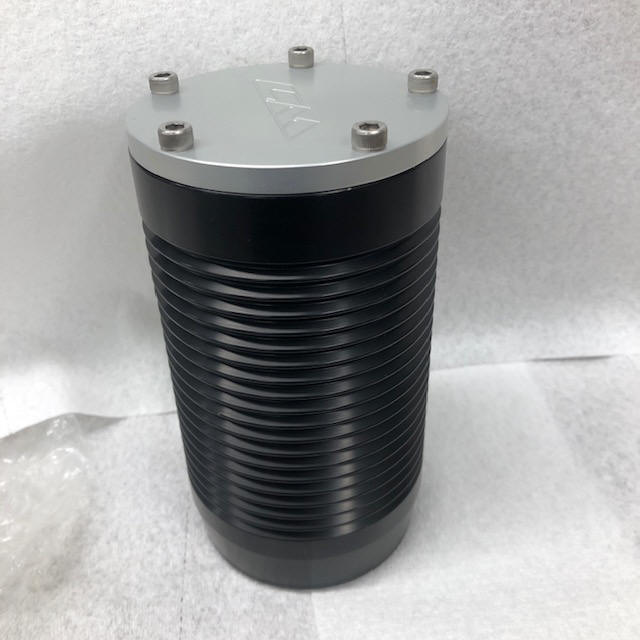
| BILLET OIL FILTERS
& Order Below Two different lengths available! We also have a filter that will work with the 89 Pontiac Turbo Trans AM Price $205 - $235 
|

ORDER REPLACEMENT PARTS BELOW.
|
Elements are $20 each |
These filters were
developed to better protect expensive racing engines. A filter was
needed that would handle a continuous high flow of oil while filtering
out small particles. The flow should not be restrictive even when the
filter is partially contaminated and all the oil should be filtered all
the time. The element should not be affected by moisture which erodes
paper elements, and it should withstand pressure surges without
collapsing or rupturing. The filter element meets these requirements and
overcome the shortcomings of conventional filters. In the years since
their development these elements have proven themselves in NASCAR, SCCA,
IMCA, IRL, and NHRA racing and on countless street miles.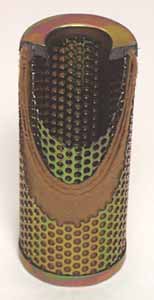 Conventional
spin on filters have an element made from porous material (usually
paper) which catches contaminant’s on its surface. The flow limitations
of this design require a compromise between large pores for more flow,
which also lets bigger particles through all the time or a bypass which
lets unfiltered oil during times of high flow. When designing the filter
this compromise was eliminated by going to depth filtration, where oil
flows through millions of intertwined passages and contaminant’s are
caught within the element. The flow characteristics of this design
allows for finer filtration with greater flow without the need for a
bypass. The synthetic fiber element material which is moisture resistant
is sandwiched between two steel cages for surge protection. Conventional
spin on filters have an element made from porous material (usually
paper) which catches contaminant’s on its surface. The flow limitations
of this design require a compromise between large pores for more flow,
which also lets bigger particles through all the time or a bypass which
lets unfiltered oil during times of high flow. When designing the filter
this compromise was eliminated by going to depth filtration, where oil
flows through millions of intertwined passages and contaminant’s are
caught within the element. The flow characteristics of this design
allows for finer filtration with greater flow without the need for a
bypass. The synthetic fiber element material which is moisture resistant
is sandwiched between two steel cages for surge protection.These elements filter out particles down to 8 microns, half the size of what the average spin-on filter does and has a flow rate even when contaminated, that is far greater than that required by any automotive application. Depth filtration extends filter element life because it can catch far more contaminates without restricting flow. Because of it’s longevity these filters are a natural match for use with the longer lasting synthetic oils. Lightweight aluminum remote canister housings are available for both the 2 5/8" tall and the 4 5/8" tall elements. While these styles have been most popular in racing, they are a good option for applications where a conventional spin-on is in a hard to access place. CM spin-on housings are offered for both the 2 5/8" tall and the 4 5/8" tall elements with thread and o-ring combinations that fits most engines. These machined aluminum housings will last the life of your car. The technology in the automotive area has advanced greatly in the past years. Today’s engines develop more horsepower from smaller displacements, they rotate at higher R.P.M.s, with tighter tolerances, and generally run hotter. To maintain longevity under these conditions engines require a strong lubrication system. Today’s oils have also improved to meet these demands, by lasting longer, and lubricating better, but even the best oil can only provide protection if it is kept clean. In an automotive engine, oil collects contaminates as it circulates through the engine, these particles should then be removed by the oil filter. Contaminant’s are present in all engines.They are a by-product of the combustion process which leaks past the piston rings. They are small particles of materials caused by the wearing of internal parts. Hot spots within an engine can cause oil decay (sludge) that needs to be removed. To be truly effective an oil filter needs to filter all the oil that goes through the lubrication system and remove these particles. Depth filtration removes more particles without restricting flow, providing the absolute protection needed.
|
| Questions Most Asked |
|---|
| Can you clean Synthetic Filter Elements? |
| No. Elements can not be cleaned because they work on depth filtration design where particles are caught within millions of tiny passages which run through out the element. This design allows for a much greater flow and the ability to hold far more particles than a conventional surface filter. |
| When should I change my filter element? |
| Under normal operating conditions we recommend a filter element should be changed every 10,000 street miles. Many customers change the element every second oil change. Under circumstances when large quantities of particles are being caught, like in older engines, engines which have not had regular oil changes, new engines during break-in, or when some oil additives are used, the element may need to be changed sooner. When the normal operating oil pressure has decreased 4 lbs. to 5 lbs. the filter should be changed. |
| How often do I change the O-ring seals? |
| Unless they are damaged they can last at least 4 filter changes. |
| Do these Spin-on Filters have an anti-drain back valve? |
| Yes. A flapper valve allows oil to easily enter the filter, while preventing it from draining out once the engine is shut off. |
| Do the filters have a built-in bypass? |
| No. The high flow of the element can handle more flow than that required by any automotive application, so all the oil can be filtered all the time. |